Culture
What to buy at the textile market (and what to skip)
by Tola Adeyemi
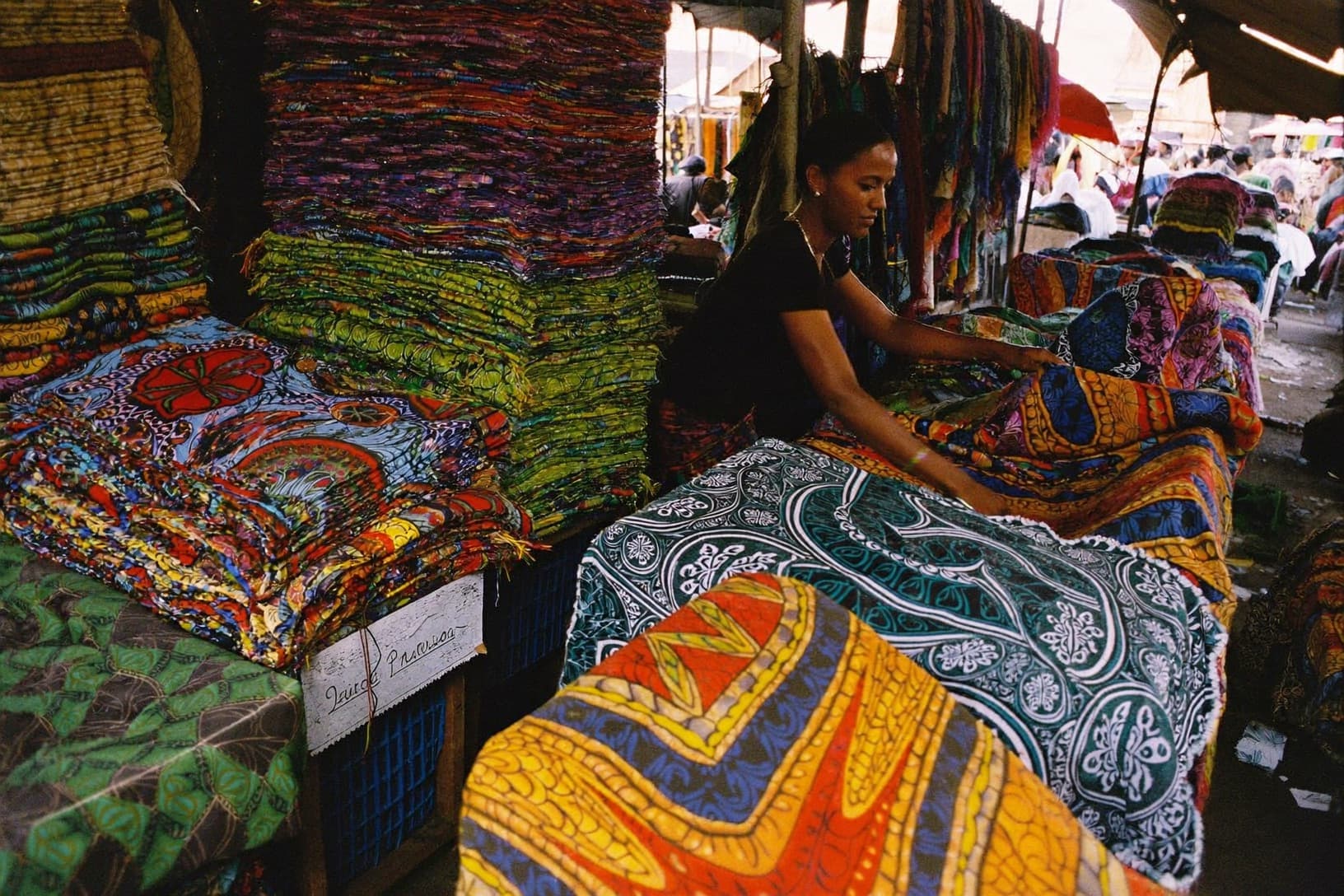
Balogun Market on Lagos Island is not a place to shop with a plan. It is three storeys and a warren of side alleys where fabric sellers are stacked shoulder to shoulder, and first-time buyers routinely walk out with the wrong thing at twice the right price. Ask any stylist who sources for a living and they will tell you the same thing: the market rewards people who know exactly which stalls to walk past.
The fabric worth paying for is real Dutch wax, sold in six-yard lengths for between 45,000 and 65,000 naira depending on the design's popularity, and aso-oke from the weavers' row near the market's Nnamdi Azikiwe Street entrance, where a wedding-length piece runs 30,000 naira and up. What is not worth it is the "Java print" sold as wax by weight in the ground-floor bins — it is a local imitation that fades within a few washes and has none of the wax's characteristic crackle finish on the reverse side. Buyers who don't know the difference end up paying premium prices for the copy.
"Turn the fabric over before you touch the price," said Funke Ilori, who has sold wax prints from the same third-floor stall for eighteen years. "Real wax shows the pattern almost as clearly on the back as the front. If the back is faint or blank, put it down and keep walking, no matter what the seller tells you about where it came from."
Bargaining is expected and starts at roughly 20 percent off the first quoted price, but it moves fastest for buyers paying in cash and buying more than one length at once. The stalls worth returning to are the ones that let a fabric breathe in daylight before you buy — a seller who insists on selling under the market's dim interior lighting is usually hiding something the sun would show.