Culture
Adire is having its moment. Can Abeokuta keep up?
by Front Row Staff
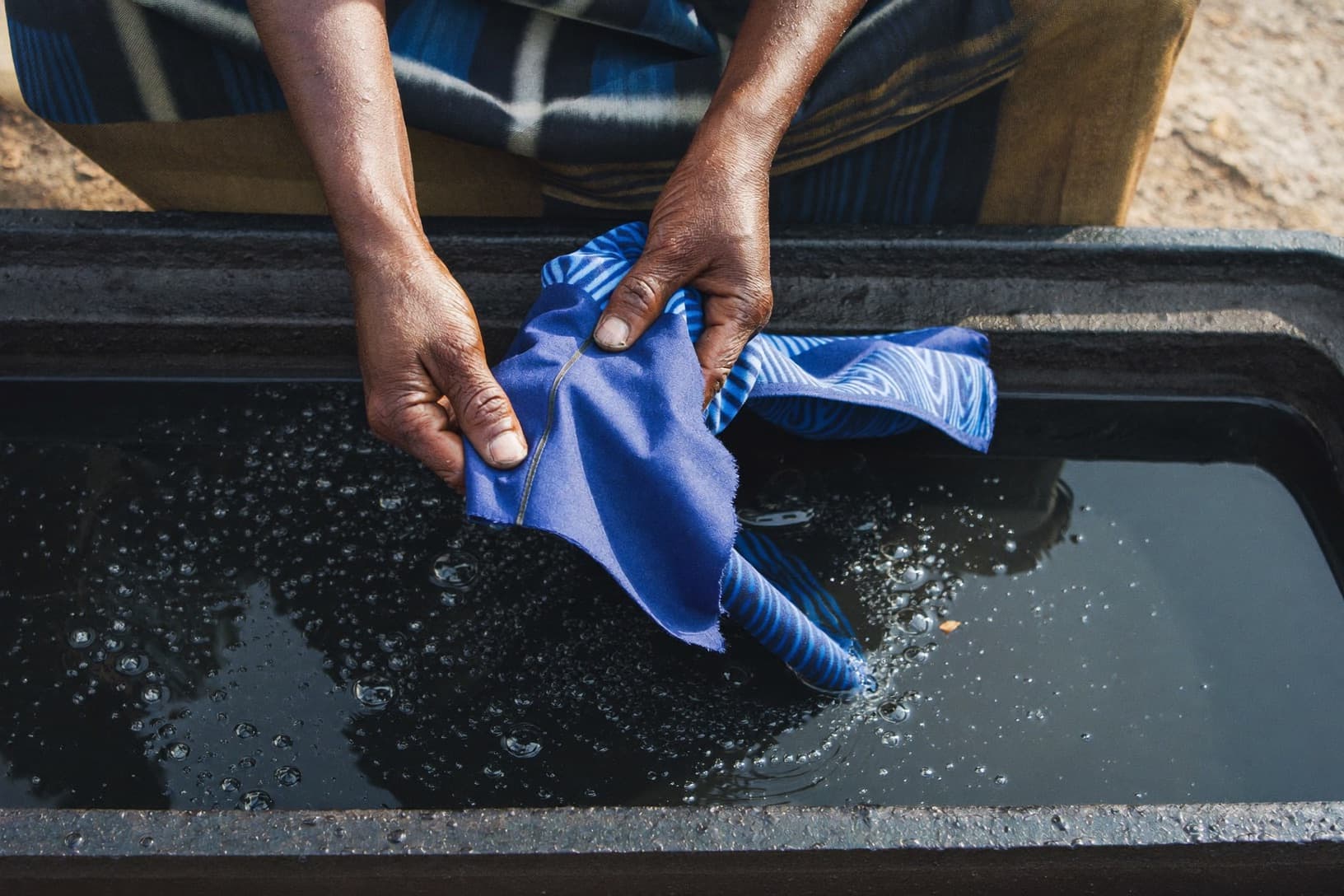
Demand for hand-dyed adire has outpaced what Abeokuta's dye pits can produce, and several of the compounds that supply Lagos boutiques and export orders say they are now turning away wholesale buyers for the first time in years.
The bottleneck is structural. The Itoku quarter, the city's dye-pit hub, has roughly forty active compounds, most of them family-run, and each pit can only take a fixed number of cloths through the resist-and-dye process before the indigo weakens and needs replacing — a cycle that runs on sun and timing, not on demand. At the same time, the apprenticeship pipeline that once supplied new aladire, or dyers, has thinned: compound heads say they are training two or three apprentices a year where they used to train ten, as younger relatives take factory or trading jobs instead. Wholesale orders from Lagos retailers have meanwhile tripled since last year, pushed by a run of designers using adire as a primary fabric rather than an accent print.
"I have orders on my table right now that I cannot fill until next month, and the buyers are not happy waiting," said Iya Moradeun Sangodele, who has run a dye pit in Itoku for over thirty years and now trains four apprentices alongside her own daughters. "Everyone wants adire. Nobody wants to learn how it is made. That is the part that worries me, not the orders."
A handful of Lagos-based buyers have begun funding apprenticeship stipends directly, hoping to widen the pipeline before the gap between demand and capacity gets worse. But compound elders warn that adire's value has always rested on scarcity and hand-work, and that any fix has to expand the number of trained dyers without turning the craft into something faster and thinner than what built its reputation in the first place.