People
In the atelier where draping is a first language
by Front Row Staff
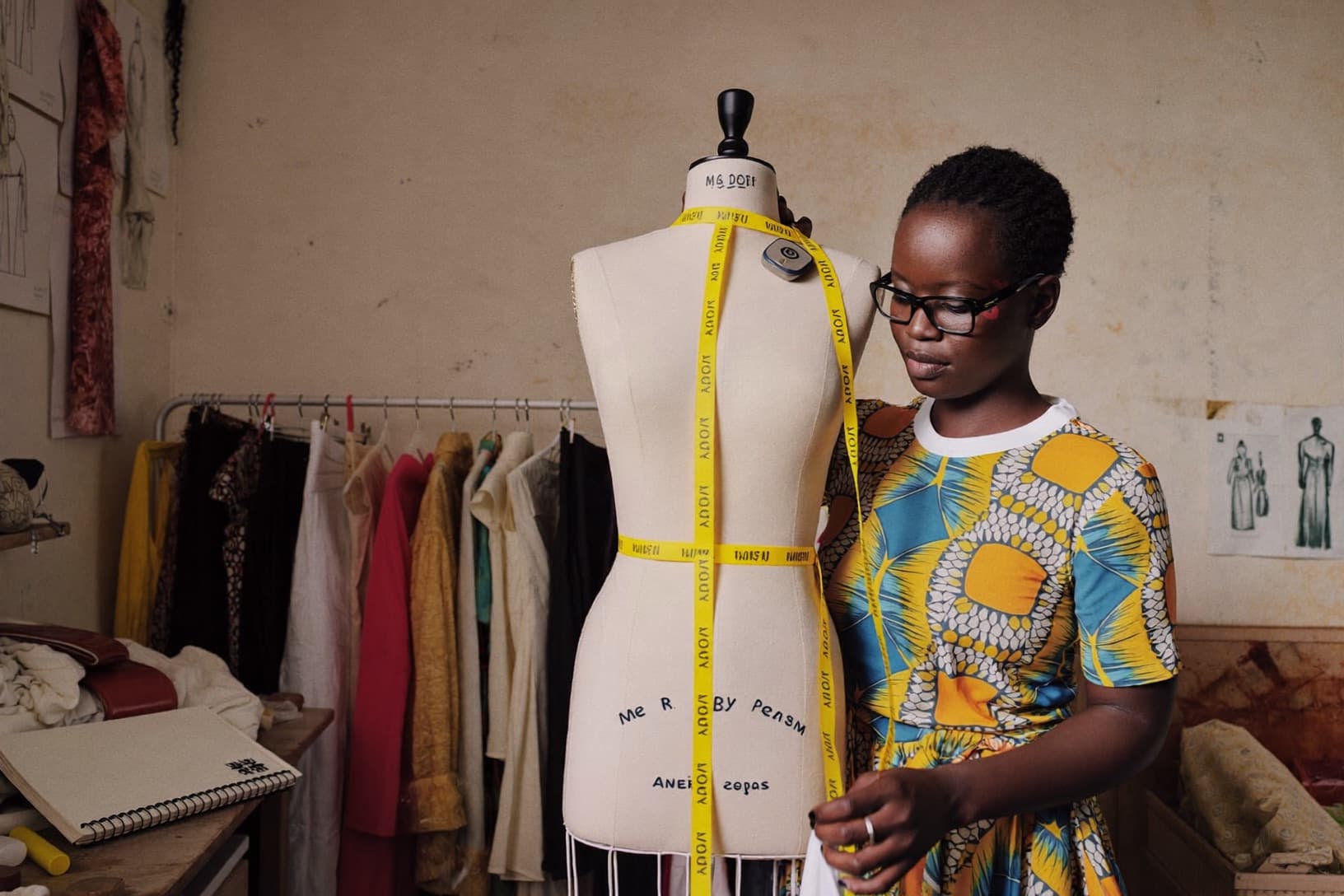
In a sunlit studio off Kabarnet Road in Nairobi, Achieng Otieno rarely opens a sketchbook before she opens a bolt of cloth. She works the way sculptors work, pinning fabric directly onto a dress form and turning it, watching how the weight falls, until a shape she hadn't planned announces itself. Only then does she cut a pattern from what the cloth has already told her.
Otieno, 37, learned draping almost by accident. Trained in flat-pattern cutting at a technical college in Nairobi, she spent two years assisting a couturier in Paris who worked almost exclusively on the stand, and came home unable to design any other way. "Flat pattern tells you what a garment should measure," she said. "Draping tells you what it wants to do. Those are different questions, and for the kind of clothes I make, I only trust the second one."
The technique is slower and more wasteful of fabric, which is part of why so few houses on the continent build a whole collection around it. But it has become Otieno's signature: a single-seam bias gown from her last collection, cut from one piece of silk crepe with no darts at all, took eleven attempts on the stand before she found the drape she wanted, and has since become the most requested custom order in the atelier's history.
"A pattern is a set of instructions," she said, pinning a new length of cloth as the afternoon light moved across the studio floor. "Draping is a conversation. I'd rather have the conversation."