

Culture
The New Life of the Ballet Flat in Nigeria
From the runways of fashion houses to the Nigerian workplace, the ballet flat tells a bigger story about how fashion becomes everyday life.
by Amara Okafor
There is a scene in The Devil Wears Prada that has become one of fashion's most enduring lessons.
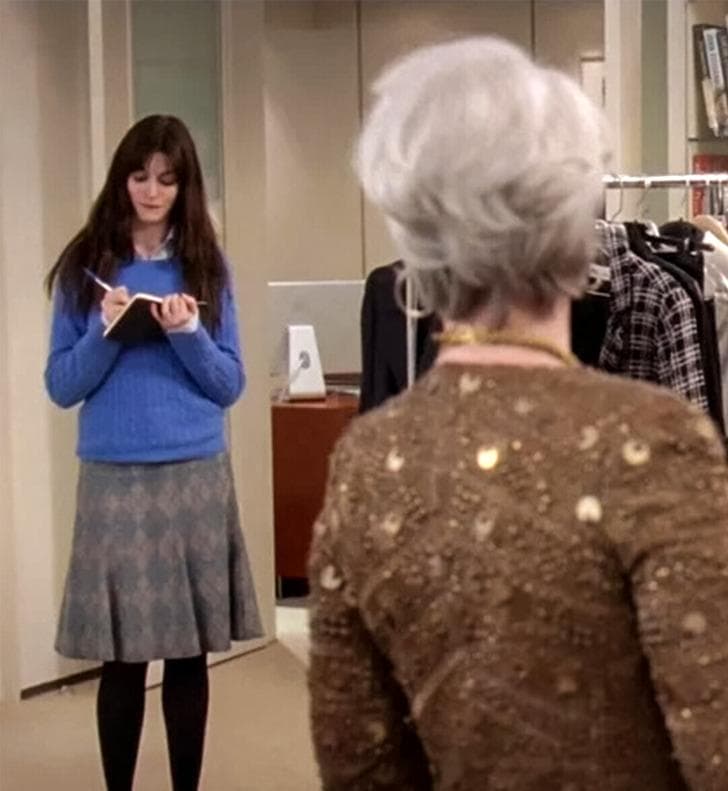
Andy Sachs, played by Anne Hathaway, looks at two seemingly identical blue belts and dismisses the difference between them. Miranda Priestly, the fictional editor-in-chief of Runway, proceeds to explain that the particular shade of blue Andy is wearing did not simply appear in a department store by accident. It had passed through the fashion system — from designers and collections to magazines, retailers and, eventually, consumers.
Andy thought she had made an independent choice.
Miranda's point was that the choice had been shaped long before Andy ever encountered the sweater.
That scene explains how fashion moves. Andy does not realise she is participating in fashion, but that is precisely the point.
Fashion rarely arrives in our wardrobes looking like fashion.
By the time an idea reaches the consumer, it has usually been translated several times. A silhouette appears on a runway. A celebrity wears a variation of it. An editor photographs it. A retailer interprets it. Social media turns it into a reference point. Manufacturers reproduce it at different price points.
Eventually, someone wears it to work on a Tuesday morning. And that is where the ballet flat becomes interesting. Not because ballet flats are new. They aren't. And certainly not because another article needs to announce that they are “back”.
The more useful question is what happens when a fashion idea moves beyond the fashion world and enters a place governed by an entirely different set of rules: the workplace. For years, the professional wardrobe has had its own visual vocabulary. The structured blazer. The tailored trouser. The pointed court shoe. The heel.
The logic was relatively straightforward: professional clothing was expected to communicate structure, seriousness and authority.
Shoes, in particular, carried part of that message. A heel could alter posture. A pointed shoe could sharpen a silhouette. A polished pair of pumps could complete the visual language of corporate dressing. But the workplace has changed, and so has the woman moving through it.
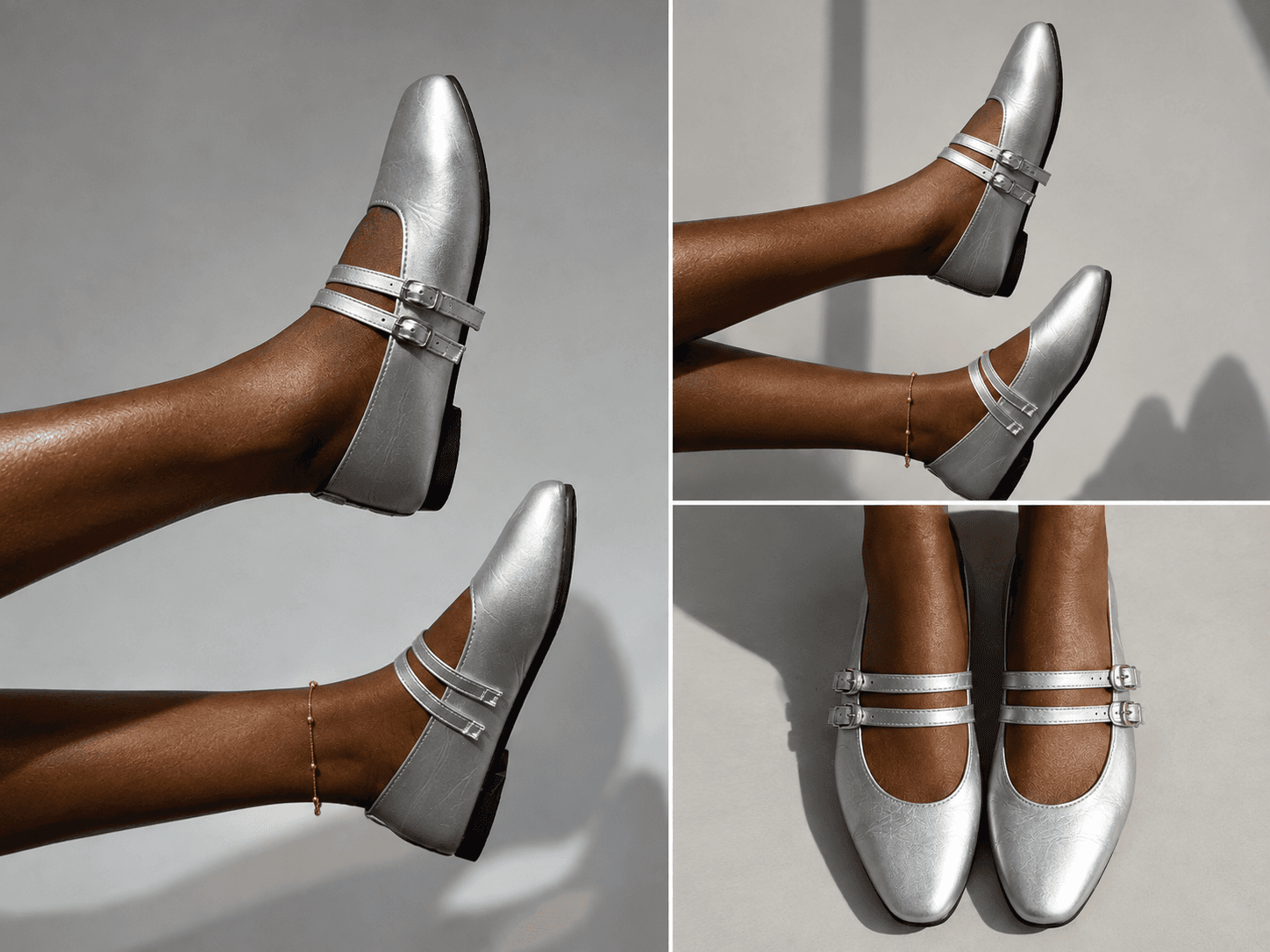
This is where the ballet flat, particularly the increasingly popular mesh and sheer variations, becomes less a trend and more a useful case study. It has the delicacy of something traditionally associated with femininity and occasion. It can be worn with tailoring without competing with it. It can sit beneath a trouser, work with a skirt or soften an otherwise structured outfit. It is also conspicuously less rigid than the traditional corporate shoe.
THE NIGERIAN TRANSLATION
This becomes particularly interesting in Nigeria because the woman wearing it in Nigeria has a different set of considerations.

There is the heat. There is traffic. There is the distance between where you live and where you work. And then there is the pair of slippers tucked under an office desk or carried in a handbag from home, waiting for the moment when comfort becomes more important than the outfit. The Nigerian woman is rarely dressing for just one context.
The same day can take her from the office to a client meeting, from a meeting to dinner, from work to an event/party or struggling for the bus to get home.
Her outfit has to work through all of it.
This is where practicality becomes part of fashion intelligence because getting dressed in Nigeria is not simply a matter of putting together an aesthetically coherent outfit. It is also a negotiation with the city.
How far will you walk? How long will you spend in traffic? Will you be standing for hours? Will you need to move quickly? Will you have somewhere to change? Will the outfit still make sense when the weather changes, the meeting runs late or the plan you had for the evening suddenly becomes something else?
These questions may never appear in a fashion editorial, but they influence what actually survives in people's wardrobes and that changes the life of a fashion product.
In that sense, practicality is not the opposite of fashion, it is one of the ways fashion becomes real because the runway can introduce an idea, but everyday life and the cultural context decides whether that idea stays. The ballet flat is interesting precisely because it sits at that intersection.
Its journey into the Nigerian woman's wardrobe tells us more than whether the shoe is trending. It shows how a fashion idea is tested, adapted and ultimately given meaning by the people who have to live in it.