

People
Models Are Not Props. Why Must They Endure So Much Just to Audition?
One model’s account of Lagos Fashion Week’s 2025 and 2026 castings raises questions about the cost of pursuing an opportunity—and the conditions applicants are expected to accept.
by Tobenna Chukwuma
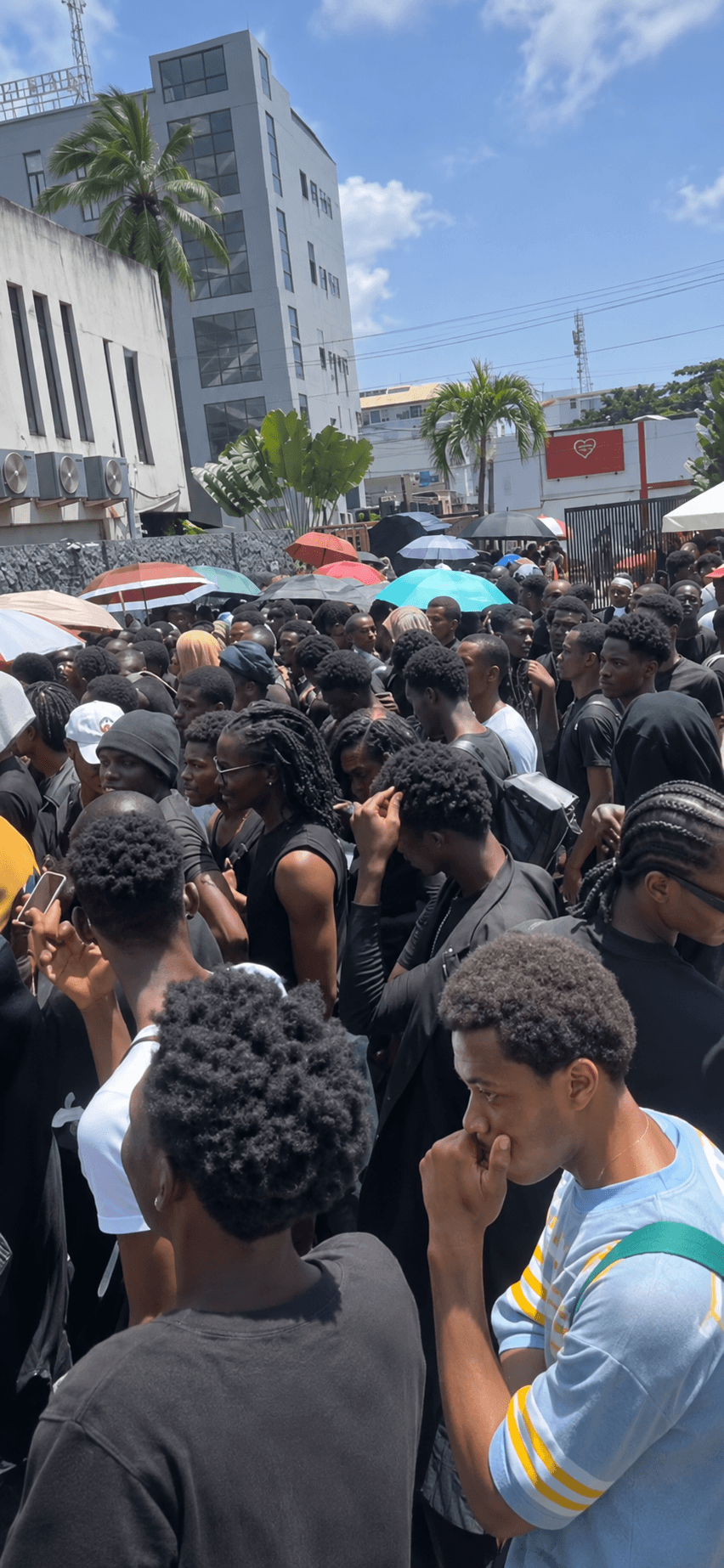
The change of venue gave him reason to try again. After a difficult experience at Lagos Fashion Week’s 2025 casting, a model saw that the 2026 casting would use a larger location. He hoped more space would mean a better-organised process.
Instead, he recalls another crowd pushing towards the entrance, applicants waiting in the sun and little visible direction outside the building. The venue had changed. From where he stood, the experience had not improved enough.
Speaking to The Front Row Africa, the model described attending both castings. His name is being withheld under the terms of the interview.
He accepts that an audition can end in rejection. What he questions is the experience applicants must endure before that decision is made.
“It’s not every job that tells you yes”
But at least I shouldn’t suffer before I get a yes or a no.
His complaint puts the experience of seeking work at the centre of a conversation usually concerned with who gets selected. For every model who reaches the runway, others leave without a booking. How they are treated is also part of an event’s professional record.
Outside the Audition Room
At the 2025 casting, the model recalls a venue too small for the turnout. People crowded inside the compound while others waited outside. He says some attendees fainted in the heat and were helped by fellow models. At the 2026 casting, he describes pushing, a lack of seating and shade, and no visible crowd direction in the area where he waited.
He does not attribute the disorder entirely to the organisers. Applicants also contributed, he says, by trying to get ahead and resisting efforts to maintain a queue. People wanted to audition and leave.
But he recalls attending other castings with comparable crowds that were better managed. In his experience, a large turnout did not inevitably produce the conditions he describes. His account suggests a gap between conducting auditions inside and managing the people waiting outside. Recalling the assistance given to those who fainted, he says fellow models helped, but he did not see organisers come outside to assist.
He thinks an ambulance was present at the 2026 casting, although he was uncertain about that detail. His concern was that applicants were still being exposed to the strain that might make assistance necessary. For the person waiting, crowd management is part of the audition experience. The opportunity may be inside the building, but the process begins well before they enter it.
One Audition, Then Another Journey
The costs of pursuing that opportunity can continue after an applicant passes the first assessment. At the 2025 casting, the model says, candidates selected on the first day were required to return the following Sunday for another round. Some were then dropped.
A callback is not itself evidence of a poorly run casting. Further assessment can be necessary. But it adds another commitment for the applicant, particularly someone who has travelled to attend. The model describes people coming to Lagos from Abuja, Port Harcourt and Enugu. For someone travelling that distance, a callback can mean deciding whether to stay in the city or pay for another journey, still without knowing whether they will secure the job.
The distinction matters because attending a casting involves spending before earning. In the model’s experience, applicants cover the cost of coming; paid work follows only if they secure a booking. The same selection process can therefore place very different demands on someone living nearby and someone travelling from another state. A return visit may require another day away from other commitments as well as additional spending.
Fashion’s opportunities are often described in terms of who is allowed to apply. The practical question is also who can afford to keep applying. That does not mean organisers can remove the uncertainty of selection. It means the arrangements surrounding selection influence who can remain in contention.
How Much Can Be Decided Before Someone Travels?
The model suggests reviewing photographs and short videos before inviting candidates to a physical audition.
“They already know what type of models they’re looking for”
In his view, an initial assessment could spare some applicants the expense of travelling when they do not meet the brief. Physical auditions would still allow casting teams to assess movement and presence, while open calls can introduce talent they might otherwise overlook. Online screening would also need simple submission requirements so that access did not depend on expensive photographs or polished videos.
For the model, the appeal is practical: fewer people making costly journeys without an initial indication of suitability. Organisers would spend more time reviewing candidates beforehand; applicants could make a better-informed decision about committing their own time and money.
When Trying Again Stops Feeling Worthwhile
By the end of the interview, the model’s frustration is less about a particular queue than whether he wants to return.
“It’s not an experience I want to ever have again.”
His willingness to attend in 2026 had depended partly on the expectation that a new venue would improve on 2025. Having found the experience difficult again, he questions whether continuing to pursue the opportunity is worth the strain.
That is where casting conditions can affect the talent an event attracts. An applicant may withdraw because the process has become too costly or exhausting, before a casting team has the chance to assess them again.
The model wants a body capable of setting standards, reviewing casting arrangements and responding when organisers fall short. His proposal reflects a desire for somewhere to take concerns beyond the queue itself—and for someone with the authority to act on them.
What is clear from his account is the importance of a response. If applicants believe problems will recur, asking them to keep trying offers little reassurance.
For a big fashion platform, attracting a crowd demonstrates interest. It does not reveal how many people leave willing to return, or how many decide that the opportunity demands more than they can reasonably give. The model’s final distinction is a modest one. He does not expect every audition to result in work. He expects the pursuit of that work to be manageable.
A model can leave without a booking and still have been treated well. That is a standard a casting should be organised to meet.