

Business
Before Paris, There Was Lagos
Fashion Week is easy to measure in spectacle: the collections, the audience, the photographs, the social media attention. Its value to the businesses that participate in it is harder to measure. For an emerging designer, a fashion week can offer visibility. But its value can extend far beyond being seen.
by Amara Okafor
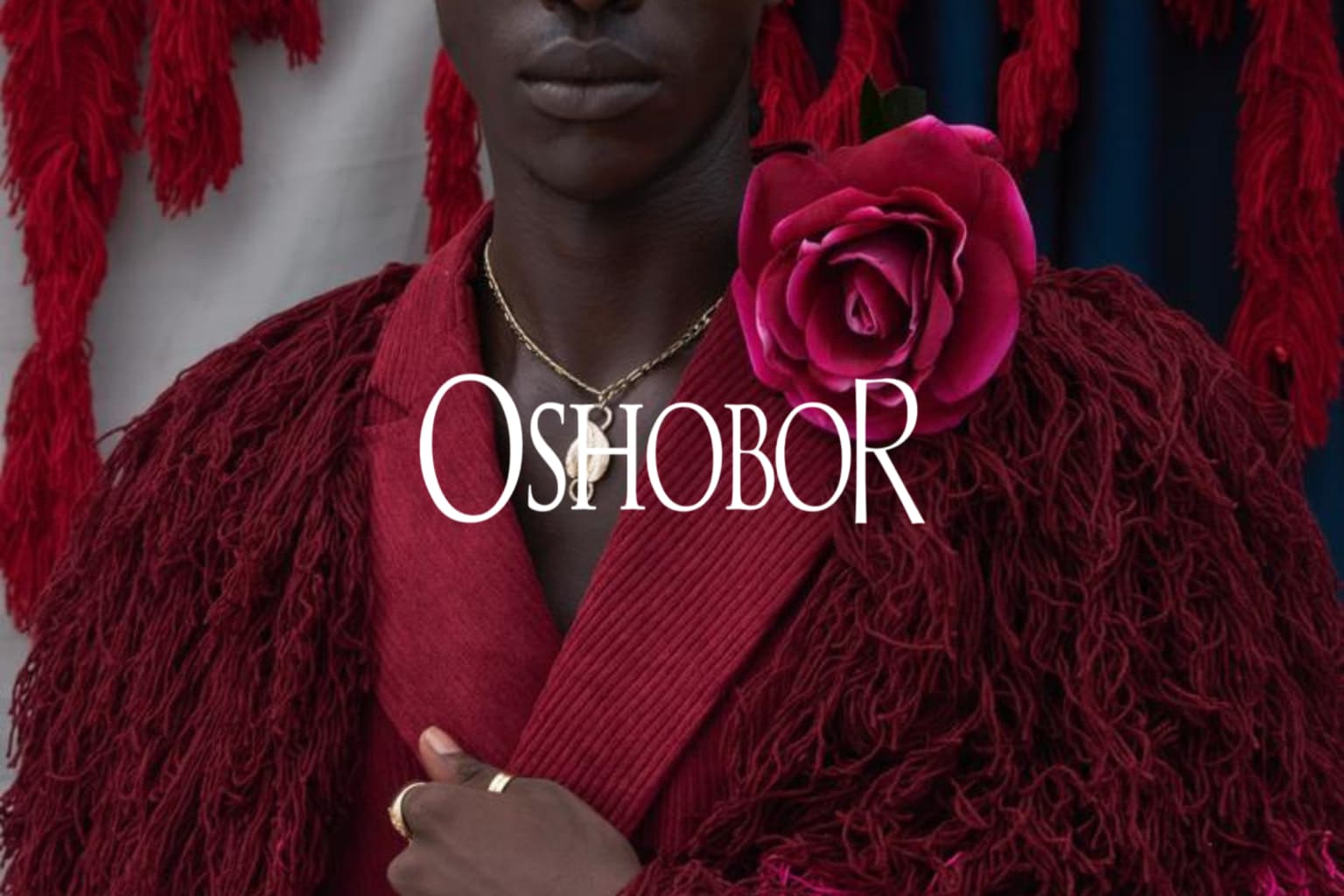
Before the international shows and larger orders, there was a young designer in Benin still trying to figure things out. There was no fully formed brand identity yet. There was no certainty about what sustainability meant to the practice. And there was no guarantee that the experiments Oshobor was making would become the foundation of the brand.
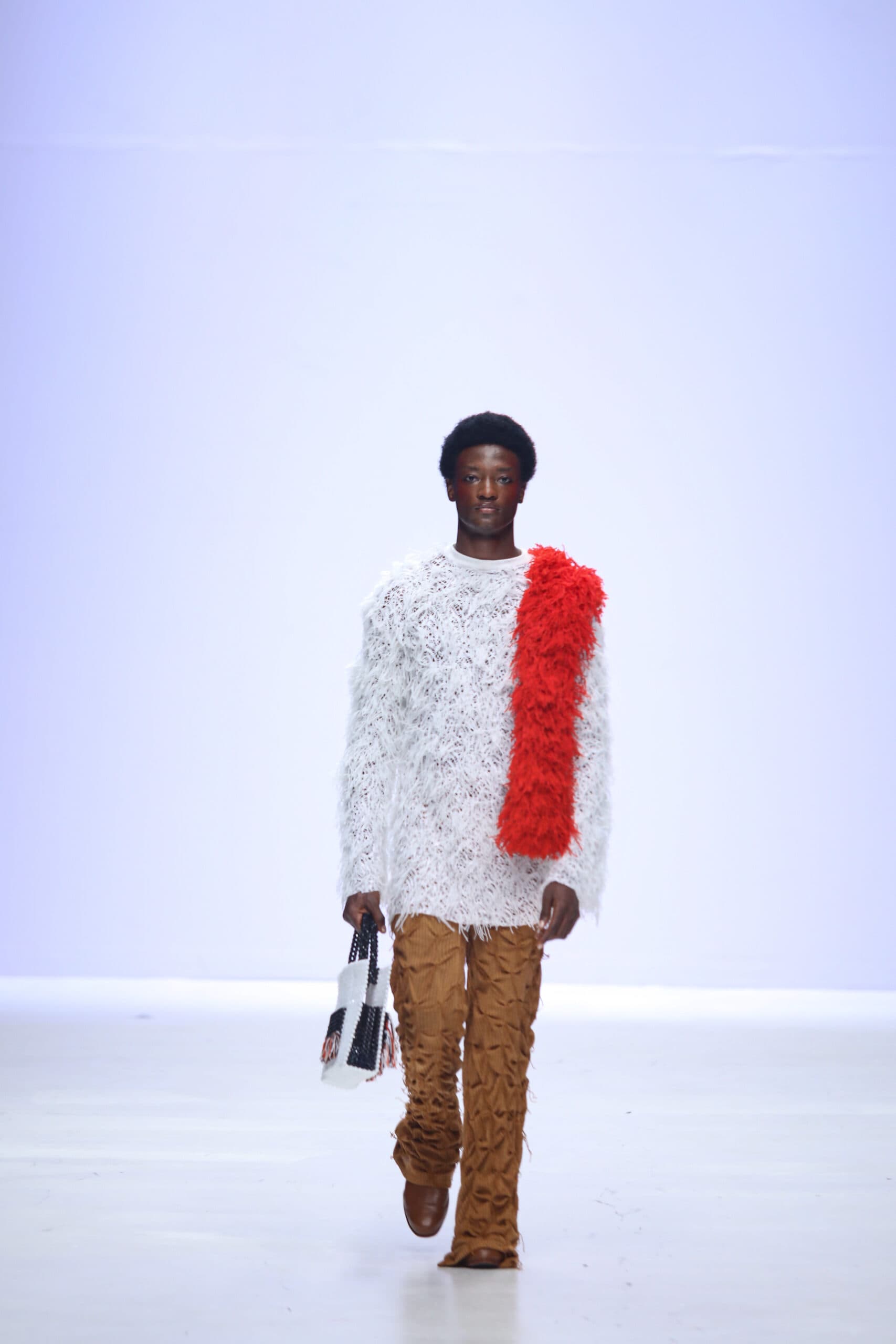
One of those experiments was wool. It was labour-intensive. It required more hands than Oshobor had. At first, the intention was simply to use the material once and move on.
Then Lagos Fashion Week happened.
More specifically, Green Access happened.
The programme recognised the direction of the work, and Oshobor began to see something that had previously been difficult to articulate: perhaps the experimentation was not a detour from the brand. Perhaps it was the brand.
“They made me realise what I was doing was gold and I had to mine it.”
That realisation would become one of the less visible outcomes of appearing on a fashion-week platform. The runway gave the clothes an audience, but it also gave Oshobor a clearer understanding of what was being built.
Finding the brand inside the work
Fashion identity is often presented as if it arrives fully formed: a designer has a signature, a point of view, a recognisable language. For many emerging designers, it does not happen that way.
It is discovered through repetition, experimentation, failure and, sometimes, through being placed in an environment that forces the work to be looked at differently.
For Oshobor, Green Access became part of that process. The designer's understanding of sustainability expanded beyond the familiar language of recycling. It became a question of materials, production, nature, process and the decisions made long before a garment reaches a customer.
That shift mattered.
Because once Oshobor understood the work more clearly, the brand could begin to communicate it more clearly too. The result was not simply a collection that could appear on a runway. It was the beginning of a more coherent proposition: an idea that could be explained, recognised and eventually remembered.
And in fashion, being remembered is a form of currency.
Then came the credibility
The first major change was not necessarily in the clothes. It was in what the clothes meant to other people. Oshobor remembers an early customer who was interested in buying but remained hesitant. Then the customer discovered that the designer had shown at Lagos Fashion Week.
The hesitation changed. The logic was simple: if the work had made it onto a recognised fashion platform, there was another layer of reassurance around the designer and the brand. It is a small story, but it reveals a persistent challenge for emerging fashion businesses.
Talent does not automatically create trust.
A designer can make exceptional work and still have to convince customers that the brand is legitimate, that the product is worth the price, and that the person behind it will still be there after the transaction.
Credentials can help close that gap. For Oshobor, Lagos Fashion Week became one of those credentials — something that could be attached to the brand when speaking to customers, buyers and people outside Nigeria. The platform did not replace the work. It gave the work context. And context matters when a young brand is asking people to believe in it.
And the demand
Visibility, however, has consequences. Oshobor experienced that firsthand!
One piece was bought by a customer named Kayla. When Kayla wore it, the response was immediate. Other people saw the piece and began asking for it too. It should have been a straightforward success story. Instead, Oshobor discovered that demand could expose every weakness in a young fashion business.

The fabric was no longer available. The designer searched the market without success. Eventually, Oshobor learned that someone else had cleared the remaining supply. Orders could not be fulfilled, customers had to be refunded.
The lesson was painful but valuable: attention is not the same thing as capacity. The next time demand came, Oshobor wanted to be ready. Materials needed to be sourced earlier; production needed to be planned and manpower needed to be considered.
Collections needed to be approached with a better understanding of what could happen once people actually started paying attention. Fashion Week, in that sense, became more than a showcase. It became a deadline around which a business had to mature.
The economics changed too
The difference between Oshobor's business before and after Lagos Fashion Week is perhaps most visible in the numbers shared during the interview.
Before the platform, Oshobor says pieces could sell for relatively modest amounts — and even at those prices, sales could be sporadic. There could be months without a sale, or only one or two sales across several months, he said.
Today, the designer operates at a very different commercial level. Individual looks can now command prices representing close to 20,000% growth from the upper end of his earlier price range, depending on the client and occasion.
The figure does not suggest that Lagos Fashion Week alone produced Oshobor’s commercial growth. Rather, it illustrates the scale of change in his business over time.
Oshobor is emphatic about that.
“I did the work.”
But the platform contributed something Oshobor believes would have been difficult to replicate alone: credibility, visibility, access and a larger audience.
From Lagos to the world
That distinction becomes even more significant when Oshobor's trajectory is viewed internationally. By 2025, the designer had made the journey to Paris Fashion Week. But Paris was not the beginning of the story.
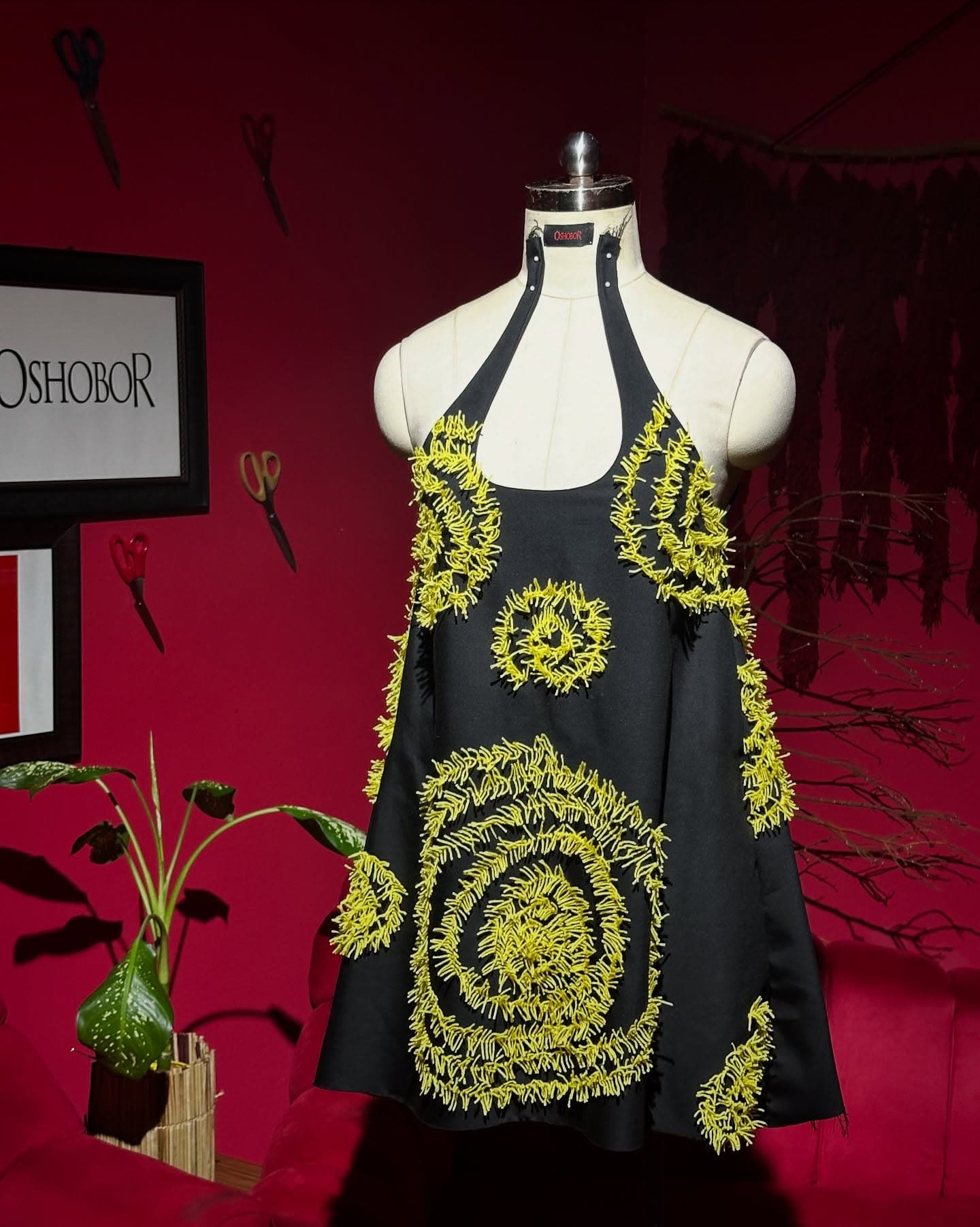
Lagos was.
For Oshobor, Lagos Fashion Week has become part of the introduction when presenting the brand outside Nigeria. The designer describes it as a “worthy mention” when speaking about the work abroad.
That matters because fashion credentials do not exist in isolation. A designer moving through the international fashion system carries a history with them: where they started, which platforms recognised them, who supported their development, where they showed and what communities they emerged from.
For Oshobor, Lagos Fashion Week is now part of that history. The significance, therefore, is larger than one designer's participation in one show.
In 2022, Vogue featured Oshobor in a story on young designers reshaping sustainable fashion in Africa. It was another indication that the work was beginning to travel beyond Nigeria's fashion conversation and into the attention of the wider industry.
Three years later came Paris.
It raises a more interesting question about the role of local fashion institutions: can a platform in Lagos become part of the professional language through which Nigerian designers introduce themselves to the rest of the world?
Oshobor's experience suggests that it can.
Fashion Week as a commercial platform
There is another misconception Oshobor's experience challenges: that Fashion Week only creates value for brands selling conventional ready-to-wear. Oshobor's practice does not fit neatly into that model.
The brand is not built around garments simply sitting on a rack waiting for immediate purchase. Yet the designer says the business still generates commercial value from participating in Fashion Week. That is because the opportunity around a fashion week extends far beyond the runway.
Even something as simple as a branded hand fan, Oshobor suggests, can become part of how a brand uses the environment around Fashion Week to create a relationship with its audience.
The point is not the hand fan itself; it is understanding the platform.
Fashion Week concentrates attention around a designer at a moment when the industry is actively looking for what comes next.
What a brand does with that moment is another matter.
The real question isn't whether Fashion Week works
There is a temptation to ask whether Lagos Fashion Week is “worth it.”But that question is too simple.
Worth it for whom?
A ready-to-wear label may measure success through immediate orders. A couture designer may value high-value clients. An emerging designer may need credibility before they can access either. A sustainability-focused designer may value mentorship and education. Another designer may measure the outcome through international visibility.
The same platform can therefore create different forms of value for different businesses. Oshobor's story demonstrates that the most important effects may not always happen during the show.
They happen afterwards. A customer becomes more willing to buy, a designer understands their identity more clearly, a business learns to prepare for demand, prices change, production changes and the brand acquires a history.
And eventually, when that designer enters another fashion capital, Lagos comes with them. That may be the more useful way to think about the value of a fashion week: not simply by asking what happened on the runway, but by asking what happened to the businesses that passed through it.
Because the runway lasts a few minutes.
The consequences can last much longer.